Reflections on Annual Session Interest Group “Community Responses to the Climate Crisis: What Do We Know and Where Can We Go?”
by Katjusa (Kat) Cisar, Milwaukee
About 30 engaged and concerned Friends turned out for an hour-long interest group on the climate crisis on Sunday, May 24 at the 2026 Annual Sessions of Northern Yearly Meeting. After an introduction by facilitator John Greenler of Madison Monthly Meeting, we broke out into small groups, then returned together in the final minutes to share takeaways from our small-group discussions.
The group teemed with ideas to address the climate crisis, from actions or perspective changes at the individual level, at the Meeting/community level, and at the national and international level via government, organizations and business.
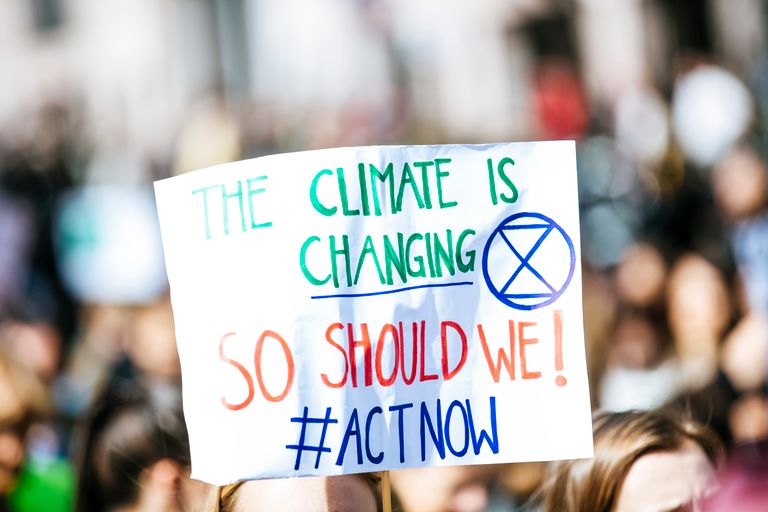
The tone was urgent. We do not have time, money, energy or resources to waste in slowing the environmental impacts of our changing climate. We are not looking 10, 20 or 30 years down the line, but now. Our time-frame is just a couple of years.
As one group put it, “We are at that tipping point. How quickly and forcefully can we act?”
Several groups brought forward the need for a cultural shift (and the systemic change that comes with that). A word that came out of this discussion was “hypercollective” — i.e. the idea that change happens more quickly and effectively when we act together, when we “scale up big.” We reject the “us vs. them” thinking that defines current U.S. politics and instead seek to find commonalities in our struggle. We are inevitably in this together.
Yet we recognize the righteous anger many of us feel about the dire situation we are in. How do we channel that energy? One group made the suggestion to gather the energy of political anger and “USE IT.” To that end, ideas included…
- Assertive Lobbying: advocacy that demands action vs. asking politely
- Protest: civil resistance and disobedience
- Economic Disruption: boycotts and shifting where we spend our money, to hold capital accountable
- Start “Small”: seek governmental change from the bottom up — begin locally with school and town boards, city councils, municipal/state committees
Our discussions also touched on philosophies and strategies, starting with the idea that changing the world begins with changing ourselves. Several groups emphasized the benefits of listening to young people and embracing novel ways of communication to spread our message. (One Friend spoke of personally rejecting social media yet still supporting it as a way to reach more people.)
We discussed the irony of our ever-more-efficient economy, which nevertheless uses more energy and produces more waste. “The reason capitalism fails,” a Friend said, “is that it tries to convert everything valuable to money, which has no value.”
The challenges we face are overwhelming: the explosion of hyperscale AI data centers, pollution by the military and Big Ag, corporate waste, government corruption, overconsumption. Our small voices can feel helpless.
To that end, we discussed again the importance of working collectively and also simply appreciating the beauty of nature. “If you adopt a piece of land, you come to love it,” and that will in turn expand your appreciation for the environment as a whole and our need for change, one Friend said. Another friend spoke of getting involved in measuring native diversity and taking the time to note the shrinking populations of plants, insects and other species. Where we put our attention is powerful.
An hour was not enough time for this huge topic. We felt rushed toward the end and wished we could have stayed together longer to share ideas and build coalitions, but the room was booked for another event. The collective energy for this urgent work is high among Friends. Let’s give it more space and time.
This work continues with theAd Hoc Climate Crisis Committee of Northern Yearly Meeting.